
Solar options for renters and apartment residents in Perth
By Clara Tan · Updated 2026-07-16
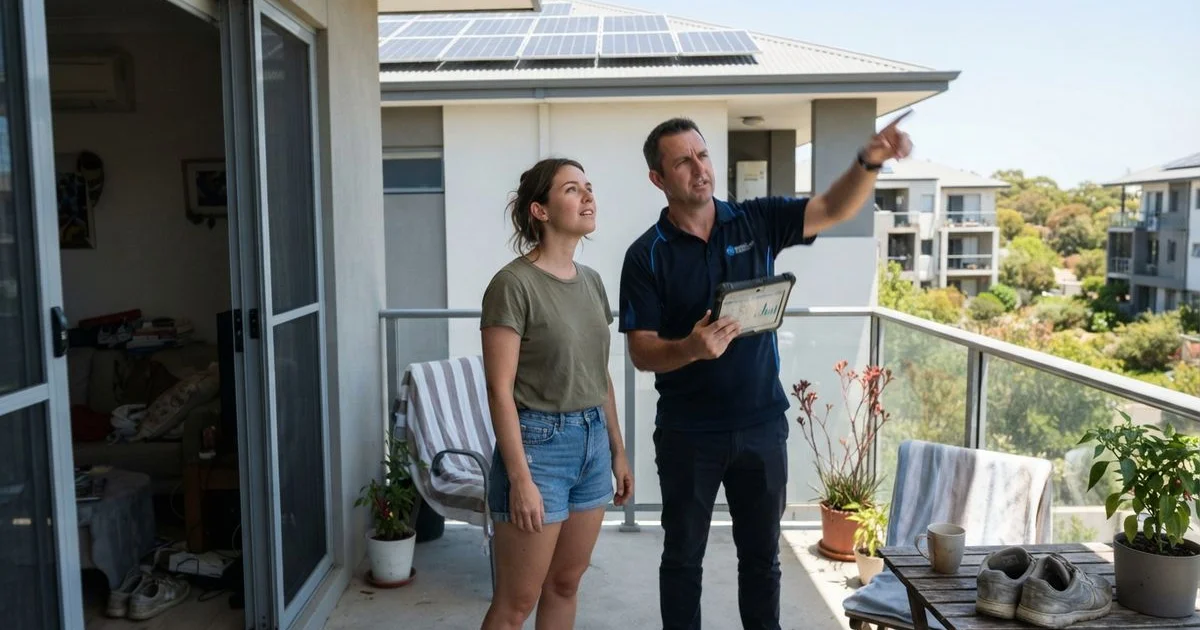
Owning the roof is normally step one of a solar decision, which leaves a lot of Perth renters and apartment residents assuming solar simply isn’t something available to them. That’s mostly, but not entirely, true, and it’s worth understanding the actual options rather than ruling it out completely.
Why renting changes the equation
Installing solar is a permanent alteration to a property: it changes the roof, adds wiring into the switchboard, and represents a genuine capital investment that typically only makes financial sense over several years. All of that sits awkwardly with a lease that might run twelve months. Landlords are also the ones who benefit from any long-term increase in property value, while a tenant covering costs may move out well before the investment pays off.
Talking to a landlord about it
It’s not automatically off the table. Some landlords are open to a tenant-funded installation, particularly with a longer lease commitment or a written agreement about what happens to the system and any cost recovery if the tenancy ends early. If you’re keen to raise it, come with a specific proposal rather than a general question, including who pays, what happens at lease end, and confirmation the landlord retains ownership of a fixed asset attached to their property.
Shared and building-level solar
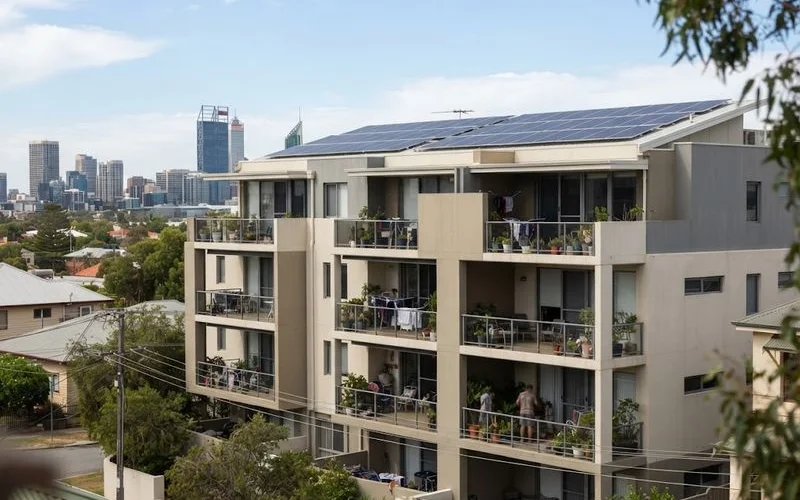
Some newer apartment buildings include solar on the shared roof that benefits the building’s common electricity supply, or occasionally individual units through embedded network arrangements. This isn’t something a resident can set up independently, but it’s worth asking your body corporate or property manager whether it’s already in place or has been considered, since it’s becoming more common in newer developments.
| Option | Who it suits | What it requires |
|---|---|---|
| Landlord-approved tenant-funded install | Long-term renters with a cooperative landlord | Written agreement on cost and end-of-lease terms |
| Building-level shared solar | Apartment residents in eligible buildings | Already in place, or raised with body corporate |
| Green or solar-backed retailer plans | Any renter | No installation, just a retailer plan comparison |
| Small portable or plug-in solar | Anyone wanting to offset minor device or appliance use | Realistic expectations about limited output |
If you move often
Frequent moves make any solar investment harder to justify, even with a cooperative landlord, since the payback period for a typical system runs several years. If you expect to move again within a year or two, it’s generally more practical to focus on the options that travel with you rather than stay with the property: comparing retailer plans at each new address, and being deliberate about when you run high-usage appliances relative to daylight hours if your plan rewards that.
Talking to your property manager, not just the landlord
If you’re renting through an agency rather than dealing with a landlord directly, the property manager is usually the first point of contact and can tell you whether the owner has shown any past interest in upgrades like this, or whether a body corporate (for strata or apartment properties) has separate rules about roof alterations that apply regardless of what an individual landlord might agree to. It’s a smaller step than raising it directly with an owner you may not have met, and can save you from putting together a detailed proposal for something that was never going to be approved.
What actually moves the needle without owning a roof
Retailer electricity plans vary in how they price solar-backed or renewable-sourced power, and switching plans costs nothing beyond the time to compare. Shifting flexible appliance use, laundry, dishwashing, charging, into daylight hours can also reduce reliance on grid electricity generally, even without your own panels, if your retailer plan rewards daytime usage differently.
If cost rather than tenancy is your main barrier, our guide to free and low-cost solar help in WA covers concessions available to pensioners and low-income households.
If you’re planning to buy eventually
If solar ownership is on your horizon once you’re in your own home, it’s worth understanding the buying process now rather than starting from scratch later. You can get a feel for typical system sizing and cost using the tools on the homepage, and our methodology explains how we assess installers so you have a shortlist ready when the time comes.
Questions people ask
- Can a renter install solar panels?
- Generally not without the landlord's agreement, since it's a permanent alteration to the property. Some landlords are open to it, particularly if the tenant covers the cost or offers a longer lease commitment.
- Are there portable solar options for renters?
- Small portable or plug-in solar setups exist for limited use, like charging devices or running small appliances, but they're a different category from a full rooftop system and won't meaningfully offset a typical household's grid electricity bill.
- Do apartment buildings ever have shared solar?
- Some newer apartment developments include shared rooftop solar that benefits all residents through the building's common electricity supply, though this depends entirely on the building and isn't something a resident can arrange independently.
- What can a renter do if solar isn't an option?
- Comparing electricity retailer plans, using appliances efficiently during daylight hours, and asking about the availability of solar-backed or green energy plans from retailers are all options that don't depend on owning the roof.