
Off-grid solar for remote WA properties: is it right for you
By Clara Tan · Updated 2026-07-23
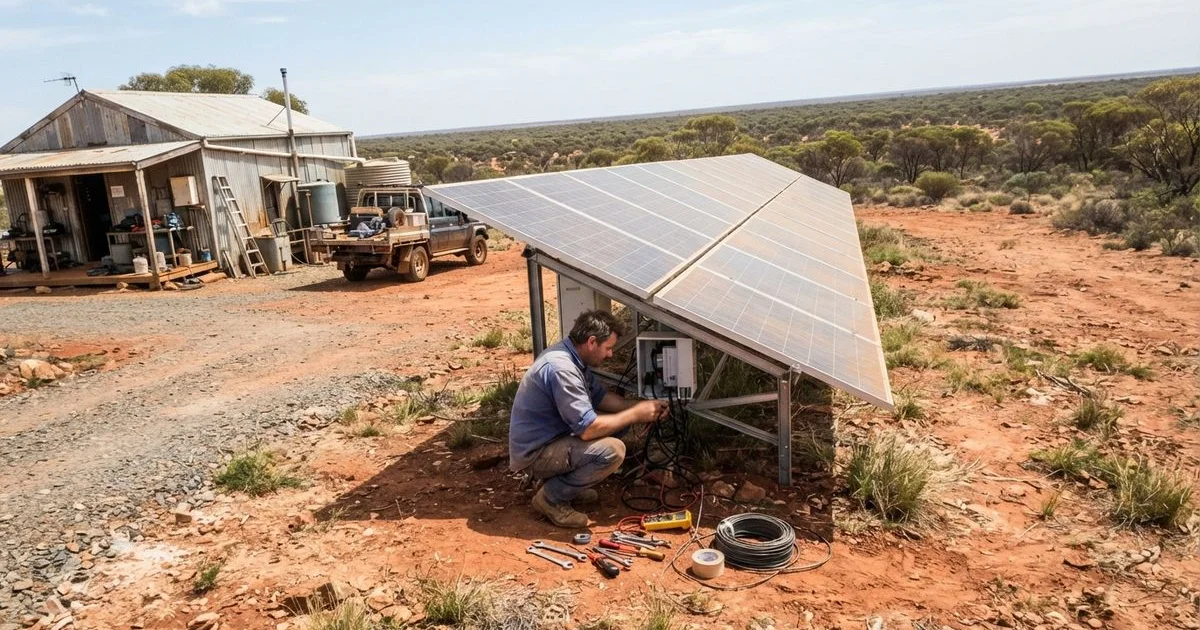
Off-grid solar gets talked about loosely, sometimes as a lifestyle choice and sometimes as the only practical option for a genuinely remote property. The two situations call for different thinking, and it’s worth being clear on which one applies to you before comparing systems.
Why off-grid is a different design problem
A standard grid-connected system can be sized generously and still work fine, because the grid quietly covers any shortfall on a cloudy week and takes any excess you don’t use. Off-grid removes that safety net entirely. The system has to be sized to genuinely cover your household through the worst realistic run of low-sun days, not just an average day, which changes both the battery capacity and backup planning involved.
When off-grid actually makes sense
Off-grid solar tends to be the practical choice when a property sits far enough from the existing electricity network that running new grid infrastructure would cost more than a properly sized off-grid system with backup. It’s also relevant for properties where grid connection simply isn’t available at all. For a property reasonably close to existing lines, grid connection is often still the cheaper and lower-maintenance option, even accounting for ongoing electricity bills over time.
What a real off-grid system needs
| Component | Role |
|---|---|
| Solar panel array | Sized generously above daily average need to cover lower-sun periods |
| Battery bank | Sized to cover multiple days of use without sun, not just overnight |
| Backup generator | Covers extended low-sun stretches the battery and panels can’t |
| System monitoring | Lets you track usage and remaining backup capacity in real time |
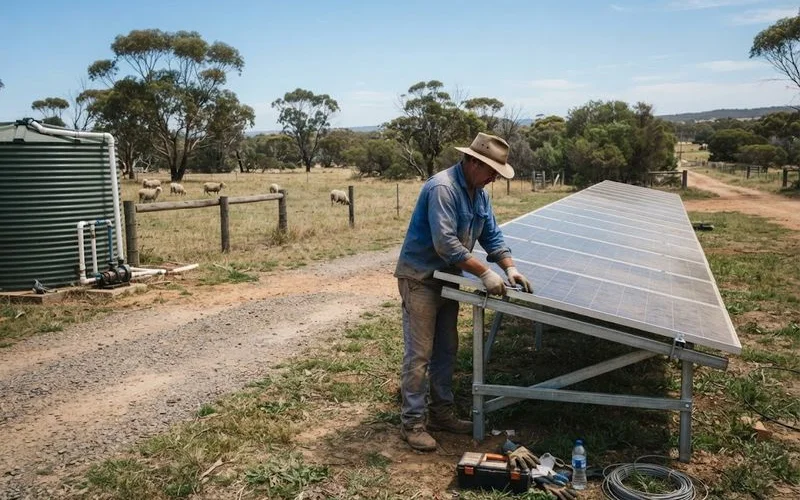
Sizing an off-grid battery bank is a different problem from sizing a grid-tied backup battery, which only needs to ride out a blackout rather than run a household indefinitely. Our guide on battery backup during a blackout covers how that shorter-duration case is sized.
Seasonal variation matters more off-grid
A grid-connected system can be sized around annual average generation and it works out fine, since shortfalls in winter are simply covered by the grid. An off-grid system doesn’t have that luxury. WA’s winter brings shorter days and more cloud cover in the south-west, which means a system sized purely on summer generation can leave you short exactly when you need backup power most. A properly designed off-grid system accounts for the weakest realistic season, not the strongest one, even though that means the panel array looks oversized for most of the year.
Comparing the real alternative
Before committing to an off-grid build, it’s worth getting an actual quote for extending grid infrastructure to your property, rather than assuming it’s obviously too expensive. Distance, terrain, and existing nearby infrastructure all affect that cost significantly, and in some cases a property that seems remote is closer to an economical connection point than expected. Treating this as a genuine cost comparison, not a foregone conclusion, avoids over-investing in an off-grid system when grid connection would have been simpler and cheaper.
Sizing it properly
Off-grid sizing starts with an honest audit of your actual household usage, not just a rough estimate. High-draw appliances, pumps, air conditioning, and workshop equipment in particular, need to be accounted for explicitly, since underestimating them is one of the more common reasons an off-grid system ends up relying on the generator more than expected.
Questions to ask an off-grid specialist
- How many consecutive low-sun days is this system designed to cover before the generator is needed?
- What happens if my usage grows over time, is the system expandable?
- How is the battery bank protected and maintained for a long working life given it’s the system’s main safety margin?
- What’s the realistic maintenance schedule for a system with no grid backup?
- How often will the generator realistically need to run in a typical year, and what does that cost in fuel?
That last question matters more than it might seem. A poorly sized off-grid system can end up leaning on the generator far more than expected, quietly eating into the running-cost savings that made off-grid appealing in the first place.
Getting the right advice
Off-grid design is genuinely more specialised than a standard grid-connected quote, and it’s worth working with a supplier who has real experience sizing systems for remote WA conditions rather than adapting a standard residential quote. You can compare off-grid and remote area power specialists and see how we assess technical expertise in our methodology. Browse the full list of providers from the homepage.
Questions people ask
- How is off-grid solar different from a normal home solar system?
- A grid-connected system relies on the grid as backup and can export excess power. An off-grid system has no grid connection at all, so it needs enough battery storage and, usually, a backup generator to cover periods of low sun on its own.
- Do I need a generator with an off-grid system?
- Most off-grid systems include a backup generator for extended low-sun periods, since sizing a system and battery bank to cover every possible run of cloudy days without one is usually impractical and expensive.
- Is off-grid solar cheaper than connecting to the grid?
- It depends heavily on distance from the existing network. For genuinely remote properties, the cost of running new grid infrastructure can exceed an off-grid system, but for properties reasonably close to existing lines, grid connection is often still cheaper.
- Can an off-grid system run a full household normally?
- Yes, if it's sized correctly for your actual usage, but it requires more careful planning around high-draw appliances and backup capacity than a grid-connected system, where the grid absorbs any shortfall automatically.