
EOFY solar tax incentives for WA businesses: timing your purchase
By Clara Tan · Updated 2026-06-18
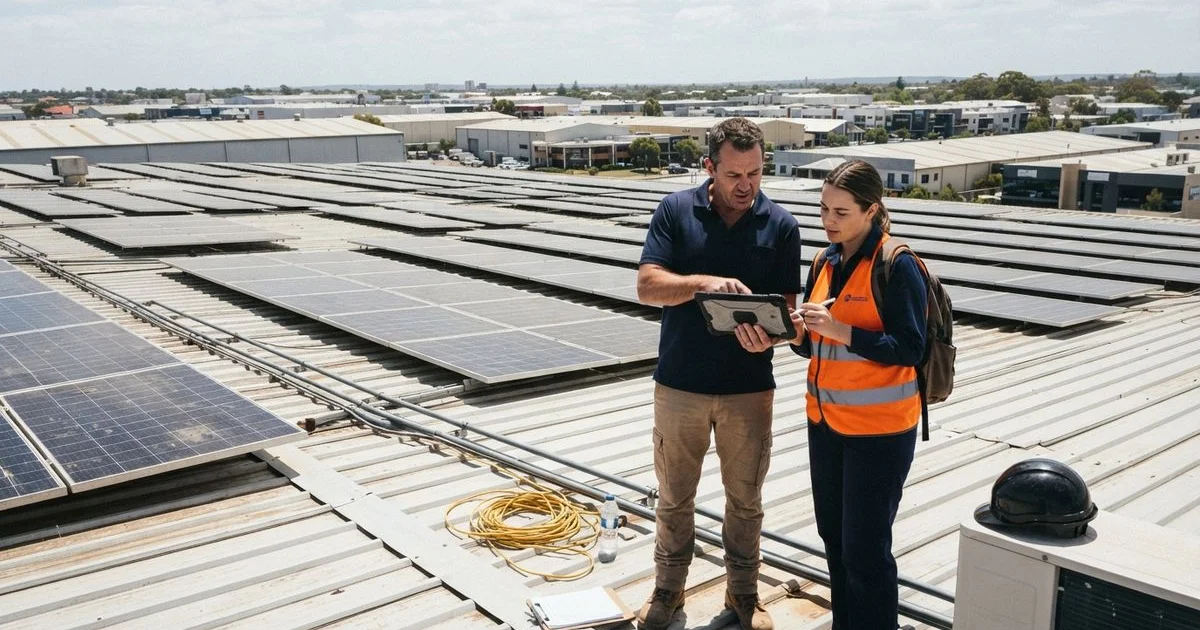
This is general information, not tax or financial advice. Speak with your accountant about how depreciation, asset write-off rules and eligibility apply to your specific business before making a purchase decision.
Every June, commercial solar enquiries in Perth pick up, and it’s not a coincidence. Businesses weighing up a system often want it installed and operational before the end of the financial year to bring the deduction into the current year’s return. Whether that timing actually suits your business is worth thinking through properly rather than rushing.
Why the financial year matters
Depreciation and small business asset write-off rules generally hinge on when an asset is installed and ready for use, not simply ordered or paid for. A solar system quoted in May but not installed until August falls into a different financial year than one installed in June, which changes when the deduction shows up on your books. Lead times for commercial solar in Perth can run several weeks longer than residential jobs, so leaving a purchase decision to the last fortnight of the financial year is a common way to miss the window entirely.
What affects a commercial installation timeline
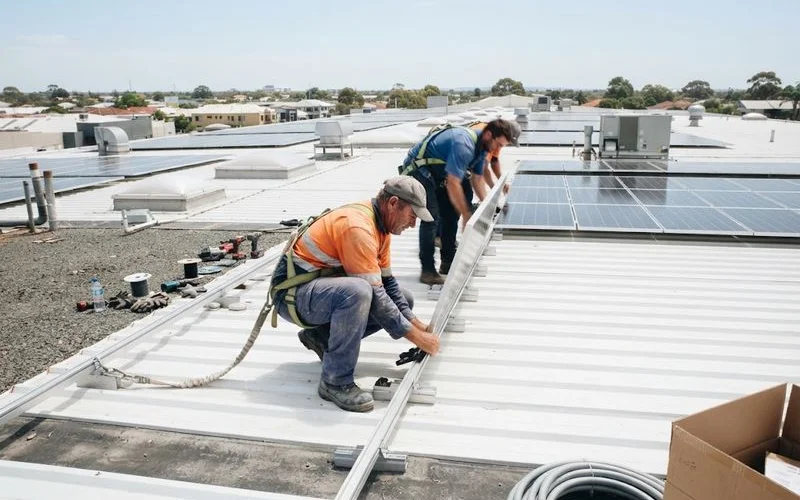
Commercial systems are rarely a same-day job like a home rooftop install. Expect a longer process shaped by:
- System design and structural checks. Larger arrays on a commercial roof often need an engineer to confirm the roof can safely carry the extra load.
- Grid connection capacity. Business premises can hit network export limits faster than a home, particularly in industrial areas, which sometimes requires additional approval steps.
- Equipment availability. Larger commercial-grade inverters and mounting equipment aren’t always held in stock locally, so lead times can stretch during high-demand periods like EOFY itself.
Sizing the decision around your business, not the calendar
| Question | Why it matters for timing |
|---|---|
| What’s your actual daytime energy use? | Oversizing for tax reasons alone can leave excess capacity you can’t fully use or export |
| Does your site have an export limit? | Some commercial connections cap how much can be sent back to the grid |
| Can your roof or structure support the array? | Structural assessment can add real time to the project timeline |
| What’s your installer’s realistic lead time right now? | EOFY demand often extends quoted timelines |
If uninterrupted power matters to your operations, it’s worth understanding how battery backup performs during a blackout before the EOFY deadline pushes you toward a system sized purely for the tax outcome.
Common mistakes businesses make
The most frequent misstep isn’t a tax miscalculation, it’s a timeline miscalculation. Businesses often start the quoting process in May assuming a June installation is realistic, without accounting for structural assessment, network approval, and equipment lead times all stacking up in the same period every other business in Perth is also trying to move on. Starting the conversation with your accountant and a shortlist of installers well before the EOFY rush gives you a far better chance of an installation date that actually lands where you need it.
A second common mistake is treating the tax outcome as the main reason to buy, rather than a bonus on top of a system that already makes sense for the business’s energy use. A system sized to maximise a deduction rather than your actual daytime consumption can leave you with unused capacity and a longer payback period than a properly sized system would have delivered.
Working with your accountant early
Bring your accountant into the conversation before you’ve settled on a system size or supplier, not after you’ve already signed a contract. They can confirm which depreciation or write-off approach applies to your business structure and asset value, and flag anything specific to your situation, like whether the business is eligible for small business concessions, that changes the calculation. This is also the point to confirm your business’s cash flow can handle the payment structure a supplier is proposing, since some EOFY deals bundle financing terms that are worth reviewing carefully rather than accepting on the strength of the tax angle alone.
Getting the order right
Talk to your accountant about the tax treatment first, then get quotes with a realistic installation date attached, not just a sales estimate. A supplier who can’t commit to a firm installation window shouldn’t be the one you’re relying on for an EOFY-sensitive purchase. Our methodology explains how we weigh responsiveness and delivery reliability when ranking providers, both of which matter more under a deadline than they do for a routine residential job. You can browse ranked options on the homepage once you know your rough system size and budget.
Questions people ask
- Do I have to buy before June 30 to claim a deduction?
- Depreciation and asset write-off rules are tied to when an asset is installed and ready for use, not just purchased, so timing matters. Confirm the exact cut-off with your accountant, since it can shift year to year.
- Does a solar system count as a capital asset for a business?
- Generally yes, since it's a piece of equipment expected to have a useful life beyond one year, which is why depreciation and asset write-off rules apply rather than a simple expense deduction.
- Can a business claim STCs as well as a tax deduction?
- Often both apply, but they work differently: the STC discount lowers the purchase price upfront, while depreciation or write-off rules affect your taxable income later. Ask your accountant how the two interact for your business structure.
- Is a bigger commercial system always a better tax outcome?
- Not necessarily. The right system size should be driven by your business's actual energy use and export limits first, with tax timing as a secondary factor, not the other way around.