
Solar battery backup during a blackout: what it actually covers
By Clara Tan · Updated 2026-06-25
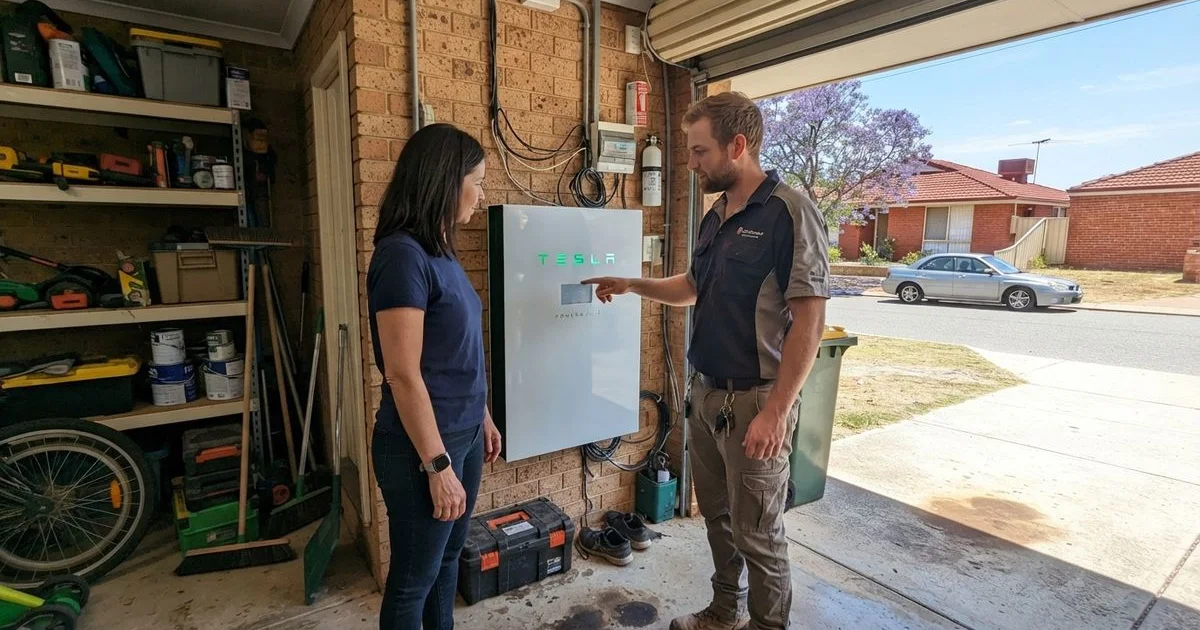
Storm season in Perth brings a predictable spike in questions about whether a home battery will keep the lights on during an outage. The honest answer is: sometimes, and only if the system is set up for it. A battery bought purely to store daytime solar for evening use doesn’t automatically double as blackout backup.
Why panels alone don’t help during an outage
Grid-connected solar systems are required to shut down automatically when the grid goes down. This is a safety measure that stops your system from feeding power back into lines that repair crews might be working on. Without a battery and inverter specifically configured for backup, your panels go quiet along with everything else in the outage, even in full sun.
Backup needs to be designed in
To keep power flowing during an outage, the system needs a battery and an inverter capable of “islanding,” disconnecting from the grid and running your home independently. Not every battery installation includes this. Some households discover only after their first outage that their battery, while genuinely useful for shifting solar use to the evening, was never wired for backup.
Ask specifically whether backup is included, and whether it covers your whole switchboard or a designated backup circuit for essentials only. The second option is more common, since backing up an entire home takes considerably more battery capacity.
Whichever setup you choose, it’s worth understanding the basics of battery fire risk and chemistry before you commit to a model and an installation location.
Sizing backup for your household
| Backup goal | Approximate capacity needed for 10kWh of evening/overnight use |
|---|---|
| Essential circuits only (fridge, lighting, some power points) | around 6kWh |
| Whole house overnight | around 10kWh |
| Whole house plus blackout protection margin | around 12.5kWh |
These are indicative figures based on typical evening and overnight household use; your actual numbers depend on what’s running in your home during those hours.
Automatic versus manual switchover
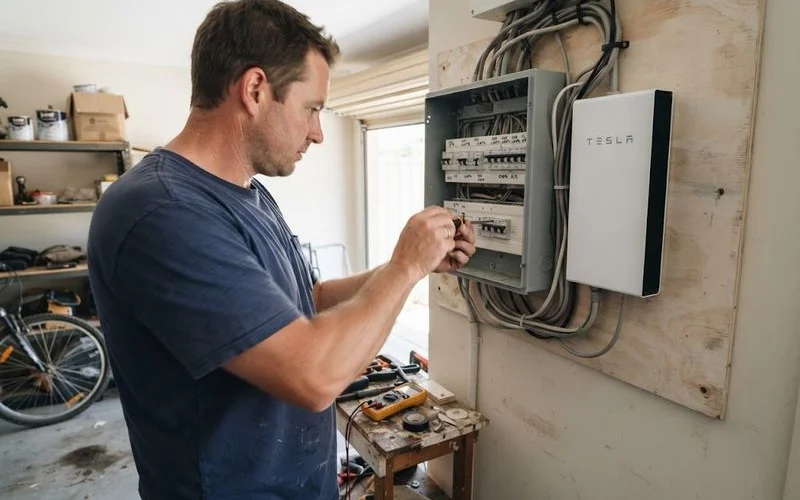
Some backup systems switch over to battery power automatically within a second or two of the grid dropping out, which is important if you’re relying on the battery to keep something like a medical device or a fridge full of food running without interruption. Others require a manual step, flipping a switch or restarting the system, which introduces a delay and means the backup only works if someone is home and aware the power has gone out. If continuous power really matters for your household, confirm which type you’re being quoted before assuming automatic switchover is included.
Testing it before you actually need it
A backup system that hasn’t been tested since installation is a bit of an unknown quantity. Ask your installer whether the system can be safely tested, some allow a controlled test of the backup function without waiting for an actual outage, and if so, do it once so you know what to expect. Discovering that a circuit you assumed was backed up isn’t, during an actual storm at night, is a worse time to find out than during a planned test on a calm afternoon.
Combining a battery with a generator
For households in areas prone to longer outages, particularly after severe storms, some people pair a battery with a small backup generator rather than relying on the battery alone. The battery handles the immediate, quiet transition and shorter outages, while the generator becomes the fallback if an outage runs on for an extended period beyond what the battery can cover. This isn’t necessary for most Perth households, since outages here tend to be resolved reasonably quickly, but it’s worth a conversation if your property has a history of longer restoration times.
What to check with your installer
- Does the quoted system include backup capability, or just solar self-consumption storage?
- Which circuits are on the backup panel, and can that be changed later if your needs shift?
- How does the system switch over during an outage, automatically or manually?
- What happens if the outage runs longer than the battery’s charge, particularly overnight or on a cloudy day?
Blackout backup is a genuinely different product decision from a standard battery installation, and it’s worth being explicit about it when you’re comparing quotes from battery storage suppliers in Perth, since not every quote will include it by default even at a similar price point.
Our methodology page explains how we factor installer transparency into supplier rankings, and you can compare providers from the homepage.
Questions people ask
- Will my solar panels still work during a blackout?
- Not automatically. Most grid-connected solar systems shut down during an outage as a safety measure, unless paired with a battery and inverter set up to isolate from the grid and keep running.
- Does every home battery provide blackout backup?
- No. Some batteries are installed purely to store solar for later use and aren't wired to run independently of the grid. Backup capability needs to be specifically included in the installation.
- Can a battery run my whole house during an outage?
- It depends on the battery's capacity and how the system is wired. Many households back up only essential circuits, like fridges and lighting, rather than the whole home, including higher-draw appliances.
- How long will a battery last during a blackout?
- It depends on your usage and the battery's capacity relative to that usage. A battery covering only essentials will typically last longer than one trying to run the full house at once.
Related on this site
- Browse battery storage systems providers
- Best battery storage systems in Perth Metropolitan →
- Solar battery safety: fire risk, chemistry and what to ask your installer
- EOFY solar tax incentives for WA businesses: timing your purchase
- Off-grid solar for remote WA properties: is it right for you
- All guides →