Solar panel cleaning: DIY vs hiring a professional
By Clara Tan · Updated 2026-07-09
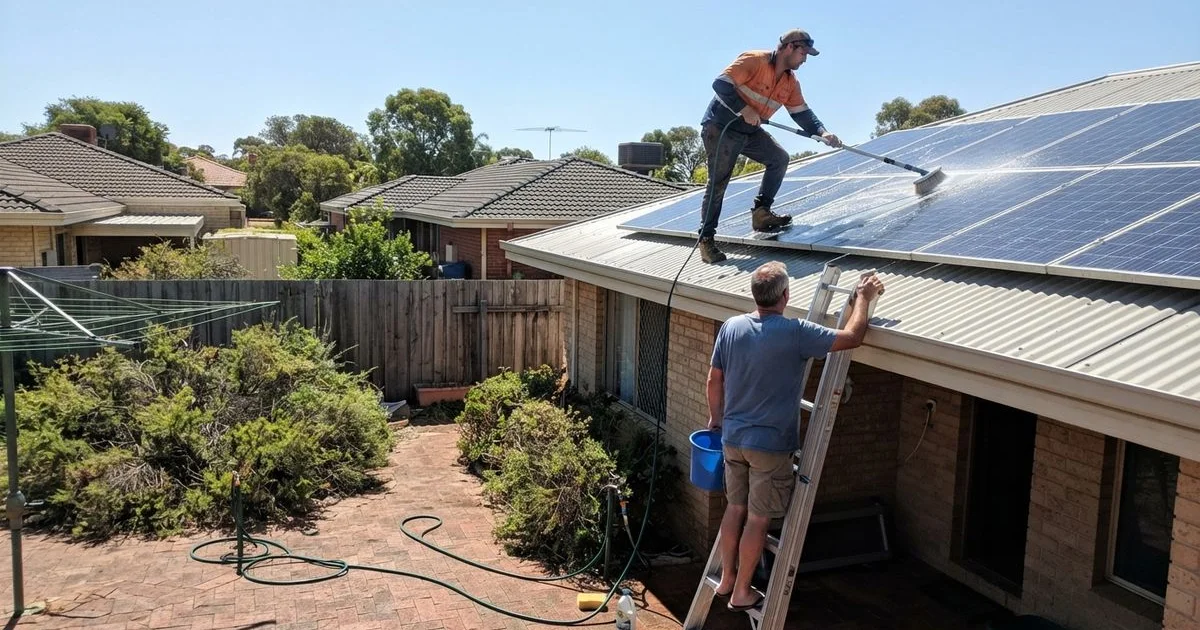
Solar panel cleaning sits in an odd middle ground: simple enough that plenty of homeowners do it themselves, but risky enough on the wrong roof that it’s worth thinking through before grabbing a hose and a ladder.
When DIY cleaning makes sense
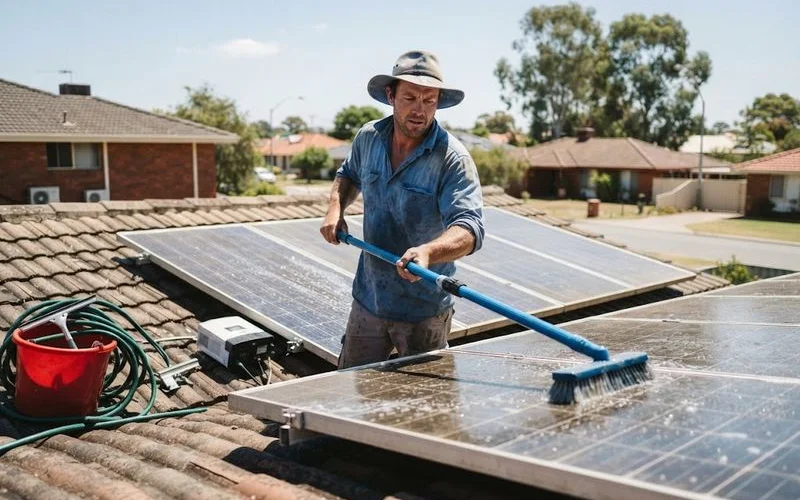
If your panels are on a single-storey roof with safe, easy access, and you’re comfortable working at that height, a gentle rinse with a garden hose and soft brush on a cool morning or evening (never in full midday heat, which can crack a panel from thermal shock) is a reasonable DIY task. Avoid pressure washers, abrasive brushes, and standard household detergents, all of which can scratch the anti-reflective coating or leave residue that attracts more dust.
When it’s better left to a professional
Steep roofs, second-storey installations, and anything requiring you to actually walk across the panels rather than reach them from a ladder shifts the balance firmly toward hiring someone. Falls from roofs are a genuine and common cause of injury, and panels themselves can be a slippery, uneven surface even for someone experienced.
There’s also a warranty angle worth checking. Some manufacturers specify approved cleaning methods, and damage from an incorrect DIY approach, cracked glass from a pressure washer, for example, can complicate a future warranty claim even if the crack itself wasn’t the direct cause of the fault you’re claiming for.
Comparing the two approaches
| Factor | DIY cleaning | Professional cleaning |
|---|---|---|
| Cost | Lowest, just your time | Ongoing service cost |
| Safety on steep or high roofs | Higher risk | Handled with proper equipment and training |
| Warranty considerations | Depends on method used | Typically uses manufacturer-approved methods |
| Ability to spot other issues | Limited, unless you know what to look for | Often includes a visual check for damage or faults while cleaning |
What affects how often you need to clean
There’s no single answer that fits every roof. Homes near busy roads pick up more grime from traffic, homes under or near trees deal with sap, leaves and pollen, and properties close to the coast can accumulate salt residue that behaves differently to ordinary dust. A steeply pitched roof also tends to self-clean somewhat with rainfall, while a shallow-pitched roof can hold onto dust and debris longer. If you’re not sure how your specific roof behaves, a first professional clean with a visual assessment is a reasonable way to establish a baseline before deciding how often you need to repeat it yourself. The kind of roof access your crew used on installation day is often a decent early indicator of how straightforward DIY cleaning will be too.
If you do it yourself, do it safely
A stable ladder, a soft-bristle brush or squeegee designed for solar panels rather than a general household broom, and plain water are the basics. Avoid climbing directly onto the panels themselves wherever possible, even on an easily accessible roof, since the surface can be more slippery than it looks and panels aren’t necessarily designed to bear a person’s full weight in the way roof tiles are. If reaching the panels safely from a ladder isn’t realistic on your roof, that’s the clearest sign it’s a job for a professional rather than a cost worth risking a fall over.
The maintenance check angle
A professional clean is also a reasonable moment to get a basic visual check of your system, mounting condition, visible wiring, panel surface damage, at the same time. This is a genuine advantage of hiring a service over doing it yourself, since a trained eye is more likely to notice early signs of an issue you wouldn’t otherwise catch until it showed up as a bigger performance drop.
Making the call
If your roof is safe and easy to access, and your equipment’s warranty terms don’t restrict DIY cleaning, doing it yourself once or twice a year is a reasonable way to keep costs down. If access is difficult, or you’d rather have someone flag developing issues while they’re there, a maintenance service in Perth is worth the ongoing cost.
You can compare providers on the homepage, and our methodology explains how we weigh service quality and thoroughness in our rankings.
Questions people ask
- Does dirt on solar panels actually reduce output much?
- Light dust usually has a small effect, but heavy buildup from pollen, bird droppings or nearby construction dust can noticeably reduce output, especially if it's concentrated on part of the array.
- Can I clean my solar panels with a garden hose from the ground?
- A gentle rinse from the ground on a single-storey, easily reached roof is generally low-risk. Getting on the roof yourself, or reaching panels on a steep or high roof, is where the risk increases.
- Will cleaning my own panels void the warranty?
- It depends on the manufacturer and how the cleaning is done. Harsh chemicals, high-pressure water, or physical damage from scrubbing can affect a warranty claim, so check your documentation first.
- How often do panels actually need cleaning in Perth?
- It varies by location and roof angle. Homes near busy roads, under trees, or in dusty areas typically need more frequent cleaning than a clear, elevated roof with regular rainfall washing it naturally.