
String vs hybrid vs microinverters: how to choose for your home
By Clara Tan · Updated 2026-06-11
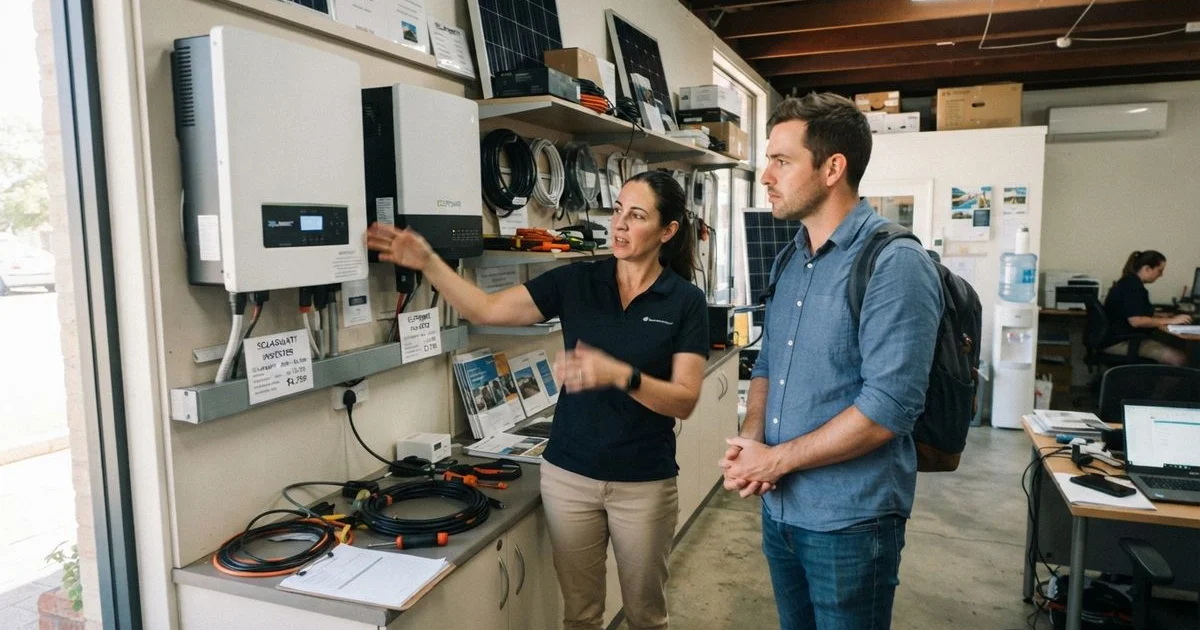
Panels tend to get most of the attention in a solar conversation, but the inverter is what actually determines how much of that panel output you can use. Get the wrong type for your roof and situation, and you can end up losing generation for reasons that have nothing to do with the panels themselves. Here’s how the three common options compare.
The three main options
String inverter. One inverter serves a whole “string” of panels wired in series. It’s the simplest, most established, and generally the cheapest option. The trade-off is that if one panel in the string is shaded or underperforming, it can drag down the output of the whole string.
Microinverter. A small inverter sits behind or under each individual panel, so every panel’s output is managed on its own. This avoids the string-dragging problem and gives panel-level monitoring, which is useful on roofs with partial shade, multiple roof angles, or planes facing different directions.
Hybrid inverter. Built to manage both solar input and battery charging and discharging in one unit, rather than needing a separate battery inverter later. It’s the natural choice if you’re installing a battery now, and worth considering if you’re fairly sure you’ll add one down the track.
Comparing them side by side
| Factor | String inverter | Microinverter | Hybrid inverter |
|---|---|---|---|
| Typical upfront cost | Lowest | Higher | Higher |
| Handles partial shading well | No | Yes | Depends on panel-level setup |
| Panel-level monitoring | No | Yes | No, unless combined with optimisers |
| Built-in battery management | No | No | Yes |
| Best suited to | Simple, unshaded roofs | Complex or partly shaded roofs | Homes adding a battery now or soon |
What actually matters for your roof
A single-plane roof facing north with no shade from trees or neighbouring buildings is the easiest case: a string inverter usually performs close to its theoretical maximum, and paying more for microinverters buys you little in that scenario.
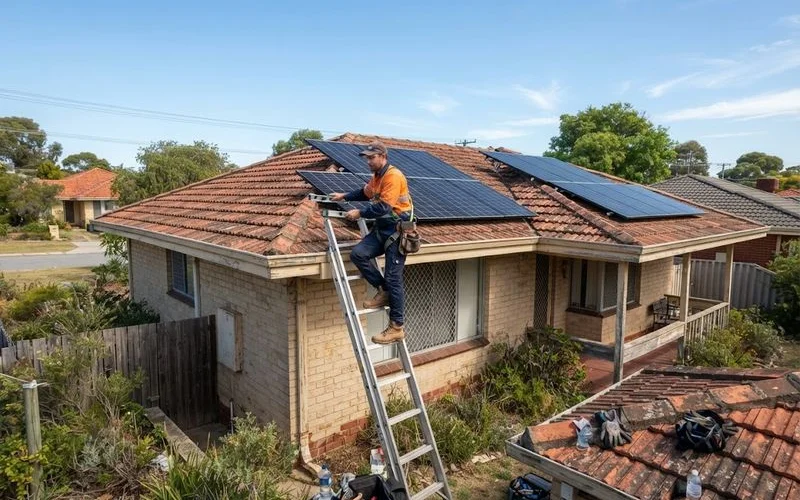
If your roof has two or more sections facing different directions, or there’s a chimney, tree, or antenna casting a shadow across part of the array for even part of the day, panel-level control starts to matter more. Some installers solve this with a DC optimiser added to a string setup rather than full microinverters, which is a middle option worth asking about.
Battery plans change the answer
If a battery is part of your near-term plan, a hybrid inverter usually simplifies the installation and can work out cheaper overall than paying for a string inverter now and a separate battery inverter later. If a battery is more of a maybe-someday, it’s reasonable to install a standard string inverter and revisit the decision when you’re actually ready to buy, since inverter technology and pricing both keep moving.
Warranty length is also worth checking against inverter type. Inverters generally have shorter warranty periods than panels, and it’s the component most likely to need replacing within the system’s working life, regardless of which type you choose.
Lifespan and replacement
Inverters, regardless of type, tend to have a shorter working life than panels. String inverters are usually the simplest to replace, since it’s a single unit near the switchboard. Microinverters, being mounted on or behind each panel, can mean more labour to access and swap an individual unit if one fails, though only that single panel’s output is affected in the meantime rather than the whole string going down. Hybrid inverters sit somewhere in between: replacement is usually straightforward, but losing the unit also affects your battery’s ability to charge or discharge until it’s fixed, which is a bigger inconvenience than losing solar generation alone.
It’s worth asking your installer directly what a replacement actually involves for the specific inverter they’re recommending, including rough turnaround time, since this is rarely covered in an initial sales conversation but matters a lot if something fails a few years in.
Monitoring and everyday use
Beyond the technical differences, think about how you’ll actually interact with the system day to day. Microinverter and optimiser setups typically give panel-level detail in their monitoring apps, which is genuinely useful for spotting an underperforming panel early, but can also be more information than some households want to look at regularly. A straightforward string inverter with whole-system monitoring is easier to glance at occasionally without needing to interpret panel-by-panel data.
Getting advice you can trust
Ask any inverter supplier or installer in Perth to explain, in plain terms, why they’re recommending a specific inverter type for your roof rather than just quoting their default option. A good answer references your specific roof layout and shading, not a generic sales pitch. If you’re still at the quoting stage, the installation walkthrough covers what happens on the day once you’ve settled on an inverter. You can compare providers and see how we assess them on the homepage, and our methodology explains the weighting behind those rankings.
Questions people ask
- Which inverter type is cheapest?
- A string inverter is usually the lowest upfront cost. Microinverters and hybrid inverters typically cost more, but each solves a specific problem a plain string inverter doesn't.
- Do I need a hybrid inverter if I'm not adding a battery yet?
- Not necessarily. Some homeowners install a hybrid inverter anyway to avoid a second inverter purchase later, but it only pays off if you're fairly confident you'll add a battery within the inverter's lifespan.
- Are microinverters worth it on an unshaded roof?
- Less so. Their main advantage is isolating each panel's output, which matters most when shading, roof angle changes, or panel-level monitoring are a priority.
- Can I mix inverter types on one roof?
- Generally no for string versus microinverter setups, since they use different wiring approaches. Ask your installer to confirm compatibility before assuming a mixed setup is possible.