
Solar battery safety: fire risk, chemistry and what to ask your installer
By Clara Tan · Updated 2026-06-22
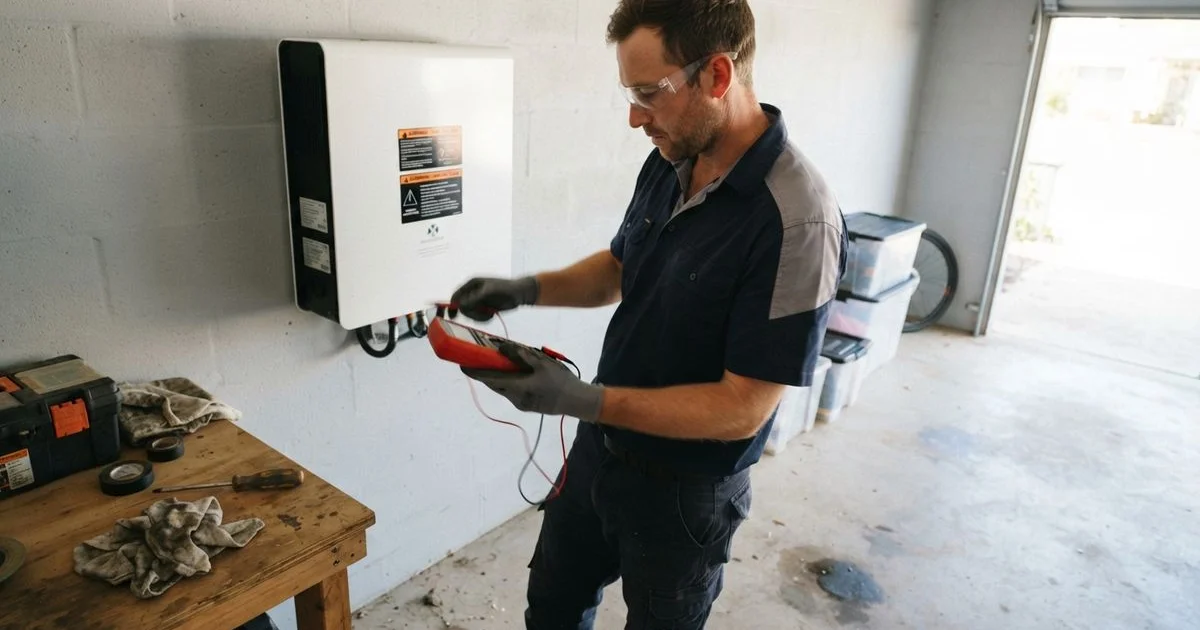
This is general safety information, not professional electrical or fire-safety advice. Always follow your battery manufacturer’s instructions and consult a qualified installer or electrician about your specific system.
Home batteries have become a normal part of a solar system rather than a rare add-on, and most run for years without incident. Still, a battery is a piece of electrical storage equipment sitting inside or against your home, and it’s reasonable to want to understand what actually affects its safety before you buy one.
Chemistry matters, but installation matters more
Lithium iron phosphate has become the dominant chemistry in home batteries, chosen partly because it tends to be more thermally stable than some alternative lithium chemistries. That’s a genuine factor, but it isn’t the whole picture. Two of the more common issues reported around battery systems in Perth aren’t chemistry failures at all: misdiagnosed faults that go unresolved for weeks, and warranty disputes that drag on after something does go wrong. Both point to installer quality and after-sales support mattering as much as the battery model itself.
What to check before you buy
Certification. Ask whether the specific battery model has passed relevant Australian safety standards for the installation type you’re planning, and get this in writing rather than taking a verbal assurance.
Placement rules. Every manufacturer sets rules on where a battery can go: clearance from doorways and windows, whether it can sit in a garage or must go outside, and ventilation requirements. An installer who skips this step, or installs wherever is most convenient rather than where the manufacturer allows, is cutting a corner that matters.
Monitoring and alerts. A battery with a companion app that flags faults early is easier to act on than one you only think to check when something already seems wrong.
Indoor, garage or outdoor placement
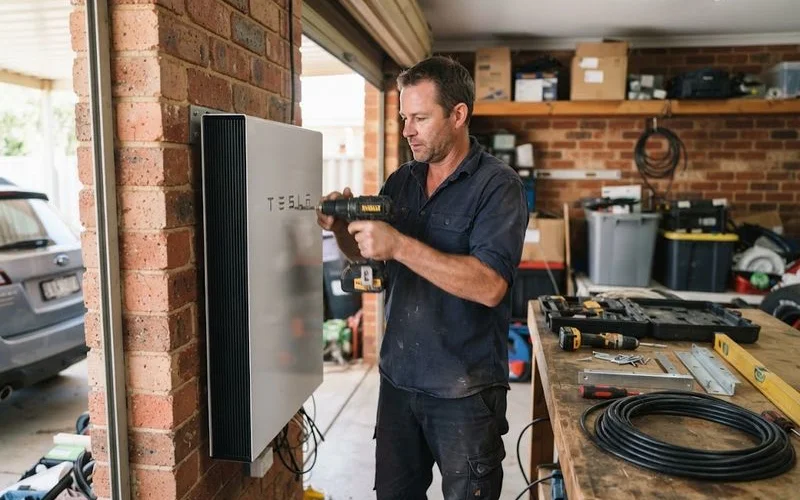
Where a battery can legally and safely go depends on the specific model and its certification, not general assumptions. Some batteries are rated for indoor installation in a garage or utility area, others are designed for outdoor mounting only, and some manufacturers restrict installation near bedrooms or living areas regardless of the room type. This is one of the areas where a corner-cutting installer might place a unit somewhere convenient rather than somewhere compliant, so it’s worth asking to see the manufacturer’s installation manual for your specific model rather than taking a verbal assurance that a location is fine.
As the battery ages
Batteries degrade gradually over years of use, losing some usable capacity as they age, which is normal and expected. What matters from a safety standpoint is whether that degradation is even across the unit or whether it’s showing up as an isolated fault, a cell behaving very differently to the rest of the pack, for example. This is part of why keeping an eye on your monitoring app over the years, not just in the first few months, is worth the small effort, since a developing issue is far easier to address early than after it’s caused a bigger problem.
Insurance and disclosure
It’s worth telling your home and contents insurer that you have a solar battery installed, since some policies ask about this specifically and an undisclosed system could complicate a claim later, even one unrelated to the battery itself. This is a quick phone call or online update, not a complicated process, but it’s easy to overlook once the excitement of a new system has worn off.
Questions worth asking your installer
| Question | Why it matters |
|---|---|
| What chemistry is this battery, and what’s its safety rating? | Confirms you’re comparing like-for-like, not just price |
| Where does the manufacturer allow this model to be installed? | Placement rules differ by brand and model |
| What’s the process if a fault is flagged? | Tells you how quickly a problem is likely to be resolved |
| How long is the warranty, and who honours it if the installer closes? | Warranty support has been a recurring pain point in this industry |
If something seems wrong
Unusual smells, swelling, unexpected noises, or persistent fault codes are all reasons to stop using the system and contact your installer or the manufacturer directly rather than waiting to see if it resolves itself. Battery fault handling is one of the areas where installer responsiveness genuinely matters, which is part of why we factor communication and after-sales support into how we assess battery storage suppliers in Perth. If you’re weighing up a battery specifically for outage protection, our guide to battery backup during a blackout breaks down what a home battery actually keeps running and what it doesn’t.
For more on how we weigh those factors, see our methodology, or browse the full list of suppliers from the homepage.
Questions people ask
- Are home solar batteries dangerous?
- Modern home batteries are designed and certified for residential use, and serious incidents are uncommon. Risk mostly comes from poor installation, damaged cells, or ignoring manufacturer placement rules, not the technology itself.
- Is lithium iron phosphate safer than other lithium battery chemistries?
- It's generally regarded as more thermally stable than some other lithium chemistries, which is part of why it has become common in home solar batteries, though no battery chemistry removes risk entirely.
- Where should a home battery be installed?
- Manufacturers set rules on placement, including clearance from doors, windows and escape paths, and whether indoor or garage installation is permitted. Your installer should be able to show you the manufacturer's specific requirements for your model.
- What should I do if my battery shows a fault warning?
- Follow the manufacturer's guidance in the manual or app first, and contact your installer promptly rather than continuing to use the system as normal. Don't attempt to open or service the unit yourself.